

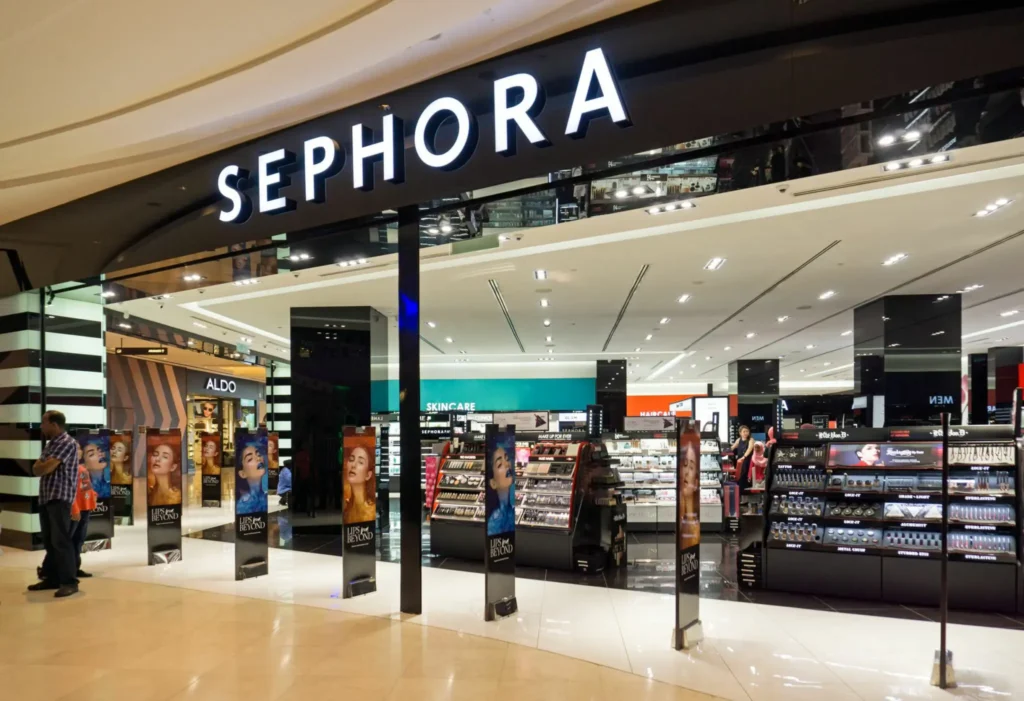
There’s a precise moment when beauty retail stopped being just shelves and fitting rooms: the moment it discovered that a live video, a charismatic host, and a product shown in real time are worth more than any banner ad. Sephora understood this before many competitors, and today its “beauty live shopping” sessions with influencers generate an average of $50,000 in revenue per session, with conversion rates 4-5 times higher than traditional marketing campaigns — figures reported by PlayShorts in its 2026 analysis of live shopping in the United States.
Why beauty works so well live
It’s no accident that the cosmetics sector has become the driving force of Western live commerce. A lipstick, a cream, or a foundation is something you “demonstrate”: a host applies it, shows the result in real time, answers questions about texture or shade — and the viewer buys at the exact moment they’re convinced, without waiting or searching for reviews elsewhere.
Market numbers confirm this. On TikTok Shop, the platform where the phenomenon has exploded fastest, livestreams (LIVEs) now convert at 7.8%, compared to 2.1% for in-feed ads — nearly a 4x multiplier, according to 2026 data compiled by Dashboardly. Revenue per single livestream ranges from $800 for the smallest sessions to over $48,000 for “mega lives” run by the most established brands.
The cases that set the standard
The phenomenon isn’t limited to Sephora itself, but extends to the whole ecosystem of brands sold (among other places) on its shelves:
- British brand P.Louise set an industry record by pre-launching its holiday collection via a TikTok livestream: $2.7 million in sales in 14 hours, with an average order value of $80 — reported by Glossy in its October 2025 Pop Newsletter.
- Skincare brand Naturium surpassed $100,000 in sales during a single eight-hour livestream launching a new arm cream, reaching over 64 million cumulative impressions across its 2025 livestreams (source: Glossy).
- POV Beauty, on its TikTok Shop debut, earned $12,000 in just 12 minutes, driven by founder Mikayla Nogueira’s fanbase (over 17 million followers) — also according to Glossy.
These cases explain why, according to BeautyMatter, a new professional role has emerged: the specialized livestream host, essentially a TV presenter reborn for the social-video era. The most in-demand names — which the outlet jokingly calls the “Avengers” of the space — can command a flat fee of $5,000 to $10,000 per livestream, plus a commission of 5% to 10% on sales generated: for a successful stream, the final payout can reach $20,000-$50,000 for a single event.
Sephora’s defensive (and offensive) move
If TikTok Shop proved that beauty can be sold live without going through a physical retailer, Sephora responded by reinforcing its own turf. In September 2025 it launched My Sephora Storefront, built with the tech platform Motom (which also works with Chewy, American Eagle, and Macy’s): it lets any creator — even with just a few tens of thousands of followers — build their own storefront of Sephora products and earn a 15% commission on every purchase, all while staying tied to the Beauty Insider loyalty program (source: Glossy, Forbes).
It’s a direct response to the competitive pressure from TikTok Shop and Amazon, which over the past two years have eaten into traditional beauty retail’s territory: according to NielsenIQ, 41% of US beauty & personal care sales now happen via e-commerce, and TikTok is already the country’s eighth-largest beauty retailer by revenue (source: Forbes). For Sephora, turning creators into a genuine external sales force — rather than letting them sell elsewhere — has become a strategic necessity, not just a marketing experiment.
The flip side
It’s not all upside: multiple industry sources (Glossy, BeautyMatter) note that live shopping is an expensive channel to run, not simply a free showcase for clearing inventory. The more mature brands now treat it as a customer acquisition tool rather than a source of immediate revenue: the goal is to bring the viewer into the brand’s ecosystem, hoping they’ll come back to buy again outside the livestream. And with top hosts commanding five-figure fees, the real margin per session needs careful calculation.
The bottom line
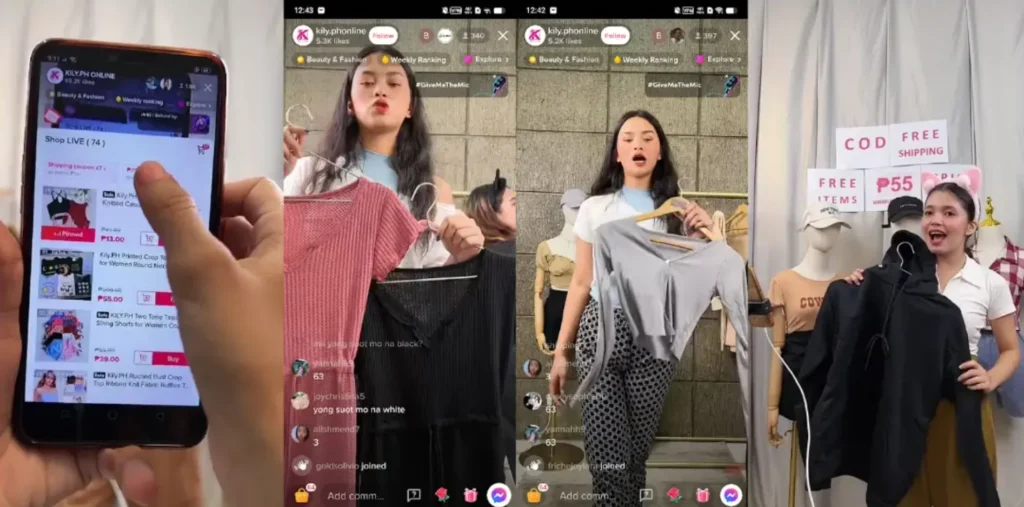
Sephora’s model confirms a broader trend already visible in our earlier roundup of the US market: live commerce in beauty is no longer a niche experiment, but a structured sales channel — complete with dedicated professional roles, defined fees, and its own ROI logic. In substance, it’s not so different from a modern QVC channel born inside a short-video app.
Sources cited in this article
- PlayShorts, Live Shopping in the US: Market, Platforms & Examples 2026 (May 7, 2026)
- Glossy, Glossy Pop Newsletter: TikTok Live Shopping is proving lucrative for beauty brands across categories (October 5, 2025)
- BeautyMatter, How TikTok Live Is Creating a New Job in Beauty (March 5, 2026)
- Glossy / Forbes, Sephora Strategies: With its new storefront platform, Sephora comes for a piece of the creator economy — and Sephora’s Creator Stores Just Killed The Influencer Marketing Playbook (September-October 2025)
- Dashboardly, TikTok Shop LIVE Shopping Statistics (2026) (April 13, 2026)