

The QVC Chapter 11 case closed on August 6, 2026: QVC Group completed its restructuring, exiting bankruptcy protection with debt cut from $6.6 billion to $1.3 billion. A remarkably fast process by industry standards — the company, which owns QVC, HSN and Cornerstone Brands, had filed on April 16, 2026, in the U.S. Bankruptcy Court for the Southern District of Texas, with a plan already agreed upon with its main creditors beforehand.
A crisis that had been building for months
The collapse wasn’t sudden: back in February 2026, QVC Group had already delayed its annual results, fueling speculation of an imminent bankruptcy. Shares plunged from over $11 to $3.74 in just two days. The underlying cause is well known: the steady decline in traditional TV viewership, live shopping’s historic home turf, hadn’t been offset quickly enough by the shift toward digital and social channels.
The plan: 8 months of negotiations, 3 creditor groups
Before the formal filing, QVC Group spent eight months negotiating with three distinct creditor groups: the Bank Group holding a $2.90 billion revolving credit facility, the QVC, Inc. Notes Group representing $2.15 billion in secured notes, and the LINTA Notes Group representing $1.48 billion in unsecured holding-company notes. The Restructuring Support Agreement was signed the same day as the bankruptcy petition, enabling a “prepackaged” process — already negotiated before the case even opened, which explains the speed of the entire QVC Chapter 11 case: just four months from filing to actual emergence.
No layoffs, business as usual throughout the process
An important detail for employees and vendors: QVC Group stated from the outset that no layoffs or furloughs were planned in connection with the financial restructuring, and that all employees would keep receiving their wages and benefits without interruption. Vendors and other general unsecured creditors were also paid in full throughout the process. The company’s international operations — including the UK, Germany, Japan and Italy — were never part of the case, which stayed limited to the U.S. entities. That commitment held throughout all four months of the proceedings, a factor industry observers point to as one reason the QVC Chapter 11 case wrapped up faster than most comparable cases.
The bet: becoming a leader in “live social shopping”
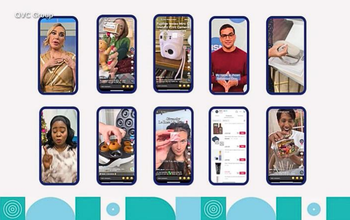
CEO David Rawlinson framed the move not as mere survival, but as a springboard for a new phase: the stated goal is to become a leader in live social shopping across social platforms, streaming apps, e-commerce sites, physical stores and traditional TV channels. It’s no coincidence that, about a year before the bankruptcy filing, QVC had already announced 24/7 livestreaming on TikTok — a sign the shift toward digital live commerce was already underway well before the financial crisis hit.
What it means for live commerce
The QVC story captures well the transition the entire TV shopping industry is going through: companies born on traditional television must reinvent themselves quickly around digital live formats to survive — exactly the ground where the future of live commerce is being decided today. With a cleaned-up balance sheet and a stated focus on live social shopping, QVC is now trying to bridge the historic TV shopping model with the new language of social livestreaming — a challenge that closely involves companies like OB84, which work every day producing live content for sales.
That transparency throughout the process is one reason analysts cite when comparing this case favorably to other retail bankruptcies of similar scale.
Sources: Digital Commerce 360 — “QVC Group files for Chapter 11 bankruptcy” (April 20, 2026); PPC Land — “QVC files for Chapter 11 with $5.3 billion debt cut plan” (April 26, 2026); Kroll Restructuring Administration (July 21, 2026)