

Before platforms, before smartphones, before the internet itself, there was a studio, a camera rolling, and a voice that had to win over whoever was on the other side of the screen — live, in real time, with no chance for a retake. That’s where what we now call OB84 comes from. No second takes, no editing to fix mistakes: just the ability to hold the attention of whoever was watching, one second at a time.
The origins of a trade
In the late 1970s, Italy’s airwaves opened up. The first local broadcasters were born almost by accident: an improvised studio, a logo panel propped up behind the presenter, a handful of people inventing a new way to tell a story to whoever was watching, every single day. It was a pioneering era, built more on courage than on equipment — but it was in those makeshift studios that Italian private television was born, the same television that would soon give rise to the major national networks. Equipment was often makeshift and shifts endless, but enthusiasm was enough to make up for any technical gap: the trade was learned on the job, one show after another.
When live broadcasting became selling

Riding that new wave of freedom, the 1980s saw the birth of a television genre Italy had never seen before: the shopping show. It wasn’t advertising in the traditional sense — it was closer to a performance. A host, a product, a switchboard ringing off the hook in the newsroom. Telemarket was founded in 1982, growing out of a handful of small broadcasters in northern Italy; within a few years, through a network of repeaters, it reached most of the country. Telemarket, in particular, would go on to employ hundreds of people between the studio and the switchboard, becoming a model copied by dozens of local broadcasters across Italy.
Around the same time, an entrepreneur from Piedmont began selling furniture live across dozens of local stations, eventually building his own television group. Different stories, but the same bet: using television not just to inform or entertain, but to build trust and close a sale, live, in front of millions of people.
Meanwhile, across the ocean
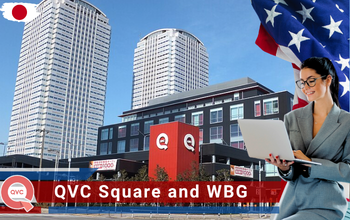
The same insight emerged, almost in parallel, in the United States. In 1977, on a small Florida radio station, a host auctioned off 112 electric can openers he’d received in place of payment for an unpaid ad — and sold out within hours. That episode led, in 1982, to the first true cable home shopping network. Four years later, in 1986, a competitor entered the market built around a simple idea — Quality, Value, Convenience — and became the world leader in the industry within a few years.
That network, born from an almost accidental insight, would lay the foundations for an entire industry that today is worth billions of dollars a year in the United States. Different continents, the same insight: a live broadcast can turn a viewer into a buyer.
The same thread, today
From those early handmade broadcasts to today’s production studios, the technology has changed radically: cable, then satellite, and now streaming and social media. But the goal of the people working behind and in front of the camera hasn’t changed at all: capture attention, build trust, and guide the viewer toward a confident purchase.
That’s the legacy we carry forward with OB84: decades of expertise built on live broadcasts for Rai, Mediaset, and private networks, now put to work for Live Commerce — with a studio that comes to you, instead of waiting for an audience to come to it. This is the value OB84 brings to every client: real experience, built over decades of live broadcasts, not improvised for the occasion.
Want to meet the people who shaped this industry? Keep reading >>>